

Islamabad has signalled a cautious shift in its approach to the newly imposed US sanctions against Iran, stating that it will adhere to “all applicable sanctions regimes” under international and domestic law, a formulation that goes beyond the country’s earlier emphasis on international law and bilateral trade commitments with Tehran.
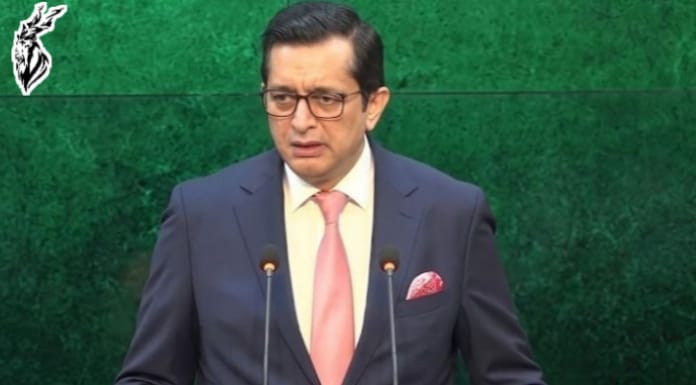
“Pakistan is a responsible member of the international community and adheres, and shall continue to adhere, to all applicable sanctions regimes in accordance with international and domestic laws,” Foreign Office spokesperson Sajjad Haider Khan said at the weekly media briefing on Thursday.
The spokesperson did not explain what Islamabad considers “applicable,” even though there is a fine difference between restrictions being legally applicable or practically applicable. The ambiguity leaves room for interpretation, but the language itself marks a departure from previous official statements.
The shift is significant because when the US announced its latest sanctions against Iran, the then FO spokesperson Tahir Andrabi had said: “About trade with Iran, Pakistan is following international law and our bilateral trade agreements with Iran.” That earlier formulation placed the emphasis squarely on Pakistan’s international legal obligations and its bilateral commitments to Iran. The new wording is broader, bringing “all applicable sanctions regimes” and “domestic law” into the framework.
Technically, the earlier position did not automatically bind Pakistan to US unilateral sanctions, which do not constitute binding international law. However, the new formulation is an acknowledgement that their practical reach can extend to Pakistani banks and companies because they operate within the international financial system and depend on access to dollar clearing, correspondent banking and financial messaging networks.
SWIFT, the international financial network, neither works as a sanctions authority nor decides whether transactions are lawful, but it says responsibility for compliance rests with the financial institutions handling them. This reality means that even without a legal obligation, Pakistani entities could face serious operational consequences if they are seen to be facilitating transactions with sanctioned Iranian entities.
The Foreign Office reiterated Pakistan’s commitment to strategic ties with Washington and to a rules-based international system. The spokesperson’s remarks come amid heightened tensions between the United States and Iran, with Washington reimposing sweeping sanctions that target key sectors of the Iranian economy.
For Pakistan, the balancing act is delicate. It shares a long border with Iran and has historically maintained trade ties, including a bilateral trade agreement. At the same time, it seeks to maintain smooth relations with the United States, a key security and economic partner. The new language appears designed to signal compliance with international financial norms without explicitly naming US sanctions, which Pakistan has not formally recognised as binding.
The cautious wording may also be intended to shield Pakistani banks from potential penalties. By saying it adheres to “all applicable sanctions regimes,” Islamabad could be signaling to Washington that it will not knowingly facilitate sanctions-busting, while leaving room for humanitarian trade or barter arrangements that fall outside the dollar system.
Analysts note that the difference between “legally applicable” and “practically applicable” is crucial. While Pakistan is not legally bound by US unilateral measures, the dominance of the dollar in global finance means that non-compliance can lead to exclusion from international banking channels. That risk is what likely prompted the shift in language.
The spokesperson did not take questions on the specifics of what constitutes an “applicable” sanctions regime or whether Pakistan would scale back trade with Iran. The Foreign Office also did not clarify whether the new formulation would affect ongoing energy or border trade projects with Tehran.
For now, Islamabad’s carefully worded statement leaves it room to manoeuvre. It avoids explicitly endorsing US sanctions while acknowledging the practical constraints of the international financial system. The move is likely to be watched closely by both Washington and Tehran as they assess Pakistan’s position in the evolving sanctions landscape.
Source: Dawn News