

Iran told the United States on Sunday that only “just, fair” talks can end the war, with Iranian Foreign Minister Abbas Araghchi declaring there is no military solution to the conflict and that negotiations rooted in “justice and fairness” remain the sole path to peace. Speaking to a gathering of foreign ambassadors in Tehran, Araghchi rejected both military confrontation and new sanctions as viable options, warning that any renewed attack would meet a stronger response than before.
“If our enemies again choose the path of military confrontation, our response will be stronger than before, and we will defend ourselves with even more force,” Araghchi said. “There is no military solution, nor any solution based on new sanctions,” he continued, adding that only negotiations based on justice and fairness could bring the conflict to an end.
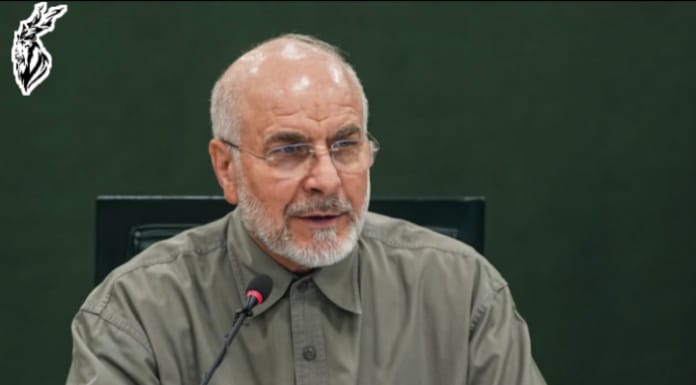
The minister’s remarks came as talks between Washington and Tehran appeared to be at an impasse, with tensions continuing to centre on the standoff over the blockade of the Strait of Hormuz, a critical conduit for Gulf oil and gas. Iran’s parliament speaker, Mohammad Baqer Ghalibaf, reiterated that the vital waterway will not reopen until seven Iranian conditions set out in a June interim agreement with the United States are met.
“The position of the Islamic Republic of Iran is completely clear and firm, and the Strait of Hormuz will not be opened until our seven conditions, based on the Islamabad memorandum of understanding, are met,” Ghalibaf was quoted by state media as saying. He added that Washington “must understand that the period of dragging out the process and dictating one-sided demands is over.”
Iranian and US officials held indirect talks last week on the sidelines of the UN General Assembly, during which Tehran said it presented its seven conditions. Those conditions include a ceasefire across the Middle East, the unfreezing of Iranian assets abroad, the lifting of sanctions on its oil sector and an end to the US naval blockade.
US President Donald Trump publicly rejected the proposal while leaving the door open to both further talks and renewed military operations. The United States nonetheless replied to Tehran’s proposal last week, with Qatar shuttling messages between the two sides.
The diplomatic exchange underscores the fragile state of negotiations, with both sides signalling openness to dialogue while holding firm to sharply divergent positions. Iran’s insistence that only just, fair talks can end the war reflects its demand for a broader settlement addressing sanctions, frozen assets and regional security, rather than a narrow deal on the Strait of Hormuz.
For Washington, the blockade of the Strait of Hormuz remains a central point of leverage, but Tehran’s linkage of the waterway’s reopening to its seven conditions has complicated any quick resolution. The involvement of Qatar as a mediator highlights the regional stakes and the continued search for a diplomatic channel despite the public impasse.
As talks stall and rhetoric hardens, the standoff carries significant implications for global energy markets and regional stability. Both sides now face a choice between returning to the negotiating table on terms each describes as just and fair, or risking a renewed cycle of confrontation that neither has ruled out.
Source: Dawn News