
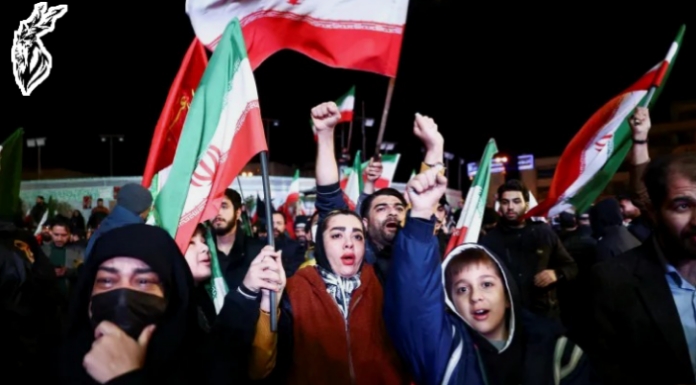

Iran has announced that negotiations with the United States will begin in Islamabad on Friday following an agreement on a two-week ceasefire between the two sides.
The announcement was made by Iran’s National Security Council on Wednesday, shortly after US President Donald Trump said Washington would suspend attacks on Iran for two weeks to allow space for diplomacy.
Trump said the temporary truce was conditional on Iran ensuring the “complete, immediate and safe opening” of the strategic Strait of Hormuz, a key maritime route through which nearly one-fifth of the world’s oil supply passes.
Iran had partially blocked the strait following US and Israel military strikes launched on February 28, a move that disrupted global shipping and pushed oil prices higher.
Talks Based on Iran’s 10-Point Proposal
Iranian officials said the upcoming negotiations would be based on Tehran’s 10-point proposal, which Washington has reportedly accepted as a framework for discussions.
In a statement posted on X, Iranian Foreign Minister Abbas Araghchi confirmed that Iran would halt its defensive operations if attacks against the country stopped.
He added that safe maritime passage through the Strait of Hormuz could be coordinated with Iran’s armed forces and said the talks would build on Trump’s acceptance of the general framework of Iran’s plan.
Trump also said the United States had received the proposal and believed it could serve as a workable basis for negotiations. According to him, the two sides had already resolved many points of contention and the two-week period would be used to finalise a longer-term peace agreement.
Pakistan to Host Negotiations
Shehbaz Sharif, the prime minister of Pakistan, confirmed that both sides had agreed to an immediate ceasefire across the region and invited their delegations to Islamabad on April 10 for formal talks aimed at reaching a comprehensive settlement.
He thanked both Washington and Tehran for agreeing to pursue dialogue and said Pakistan would facilitate negotiations to help resolve the conflict.
Key Elements of Iran’s Proposal
According to Iran’s National Security Council, Tehran’s proposal includes oversight and control of the Strait of Hormuz, which it says would give the country a strategic economic and geopolitical advantage.
The plan also calls for the withdrawal of US combat forces from military bases across the Middle East, an end to operations against Iran-aligned groups, and full compensation for damages caused during the conflict.
In addition, Iran has demanded the lifting of sanctions imposed by the United States, the United Nations Security Council and the International Atomic Energy Agency, along with the release of frozen Iranian assets abroad.
Tehran also wants any final agreement to be formalised through a binding resolution of the UN Security Council.