
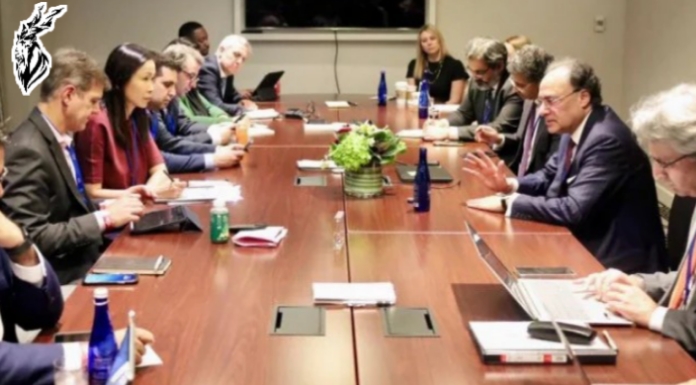

Pakistan has officially launched its Global Medium-Term Note (GMTN) program, marking a significant step in the country’s efforts to diversify international financing sources and strengthen economic stability. Finance Minister Senator Muhammad Aurangzeb confirmed the initiative during his address at the Citi Macro Forum, attended by institutional investors, noting that requests for proposals for lead managers are being issued across three key segments: Eurobonds, Islamic Sukuk, and a pioneering dollar-settled, rupee-linked bond.
The announcement comes as Pakistan anticipates imminent approval from the International Monetary Fund (IMF) for crucial program reviews. Aurangzeb revealed that a Staff-Level Agreement has been reached for the third review under the Extended Fund Facility (EFF) and the second review under the Resilience and Sustainability Facility (RSF), with Executive Board approval expected in early May. This development signals growing confidence in Pakistan’s economic reforms and fiscal management amid global challenges.
Addressing the Middle East crisis as one of the largest supply shocks in recent history, the Finance Minister outlined the government’s three-stage response strategy. This includes immediate measures to address first-order effects and ongoing coordination with the State Bank of Pakistan to manage secondary and tertiary impacts. Aurangzeb also expressed gratitude for financial support from Saudi Arabia, highlighting strengthened bilateral economic ties.
In parallel with the GMTN program, Pakistan is advancing its inaugural Panda Bond issuance, targeted for May following the signing of counter-indemnity agreements with the Asian Development Bank (ADB) and the Asian Infrastructure Investment Bank (AIIB). These initiatives reflect Pakistan’s strategic approach to tapping diverse capital markets, including conventional, Islamic, and renminbi-denominated instruments, to meet financing needs and reduce dependency on traditional sources.
Reflecting on lessons from current global disruptions, Aurangzeb emphasized the importance of building strategic petroleum reserves and accelerating the transition to renewable energy. He also highlighted emerging opportunities, including increased transit volumes at Karachi Port and renewed momentum in developing Gwadar as a strategic trade corridor under the China-Pakistan Economic Corridor (CPEC).
The GMTN program’s launch underscores Pakistan’s commitment to enhancing its global financial footprint while addressing domestic economic priorities. As the country navigates complex geopolitical and economic landscapes, these initiatives aim to bolster resilience, attract foreign investment, and support sustainable growth.
Source: ARY News