
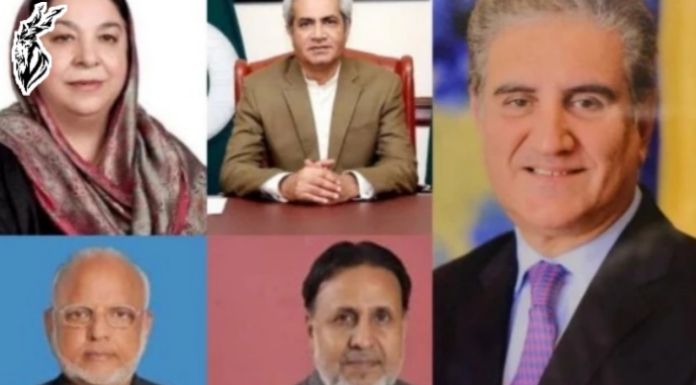

Lahore: An Anti-Terrorism Court (ATC) on Saturday acquitted Pakistan Tehreek-e-Insaf (PTI) Vice Chairman Shah Mahmood Qureshi in a case related to the torching of police vehicles during the May 9, 2023 riots, while handing 10-year prison sentences to several senior PTI leaders.
The verdict was delivered by ATC Judge Manzar Ali Gill at Lahore’s Kot Lakhpat Jail, where proceedings in the high-profile case were conducted.
Among those convicted are senior PTI figures Dr Yasmin Rashid, Mian Mahmoodur Rasheed, Ejaz Chaudhry and Umar Sarfraz Cheema. The court found them guilty in connection with the Mughalpura police vehicles arson case stemming from the nationwide unrest that followed the arrest of PTI founder Imran Khan on May 9, 2023.
The protests, which erupted across Pakistan after Khan’s arrest, saw attacks on government buildings, military installations and public property, leading authorities to launch a sweeping crackdown against PTI leaders, workers and supporters.
According to prosecutors, the accused played roles in organising and facilitating demonstrations that resulted in the burning of police vehicles in Lahore’s Mughalpura area. During the trial, the prosecution presented testimony from 37 witnesses, all of whom were cross-examined by defence counsel.
Following the completion of final arguments, the court reserved its decision before announcing the verdict on Saturday.
The case originally involved 22 accused individuals. However, the court issued its ruling for 15 of them, while two suspects — Arbaz Zaman and Ilahi Bakhsh — had earlier been declared proclaimed offenders.
The judgment comes amid continued political tensions surrounding the fallout from the May 9 riots and the legal proceedings against PTI leaders. Just days before the verdict, five jailed PTI leaders — Qureshi, Dr Yasmin Rashid, Umar Sarfraz Cheema, Ejaz Chaudhry and Mahmoodur Rasheed — issued a joint letter calling on opposition leaders to pursue dialogue with Prime Minister Shehbaz Sharif through a proposed “Charter of Pakistan.”
Addressed to opposition figures Mahmood Khan Achakzai, Allama Raja Nasir Abbas and PTI Chairman Barrister Gohar Ali Khan, the letter argued that political stability, constitutional supremacy and respect for electoral mandates were prerequisites for meaningful economic reform.
The signatories questioned whether sustainable economic progress could be achieved without political consensus and constitutional certainty, stressing the need for broader institutional balance and democratic continuity.
The May 9 unrest remains one of the most consequential episodes in Pakistan’s recent political history. Demonstrators targeted several civilian and military sites, including Lahore’s Jinnah House and the General Headquarters (GHQ) in Rawalpindi. The military subsequently described the events as a “Black Day” and authorised trials under the Pakistan Army Act.
In the months that followed, numerous PTI members and supporters were arrested, with several cases referred to military courts. In December, military tribunals convicted 25 individuals, including Hassan Khan Niazi, a nephew of Imran Khan, while dozens of others were later sentenced in related proceedings.
The latest ruling marks another significant development in the ongoing legal cases arising from the May 9 riots, which continue to shape Pakistan’s political and judicial landscape.