
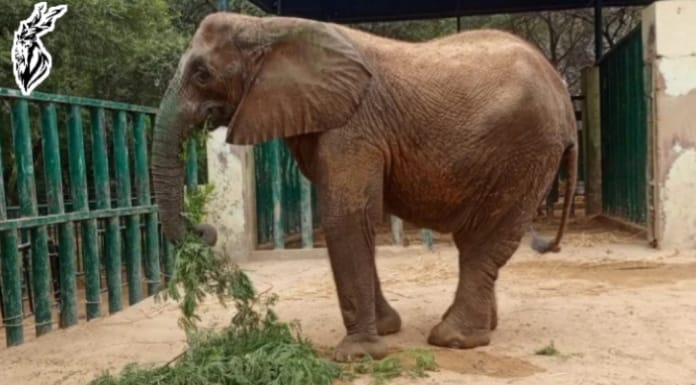

Madhubala the elephant remains under close veterinary watch at Karachi’s Safari Park, where she collapsed in her enclosure this week, with officials still unable to pinpoint the exact cause of the incident despite conducting multiple tests, including an X-ray, over the past two days.
According to a spokesperson for the Karachi Metropolitan Corporation (KMC), the African elephant is suffering from “acute weakness and low immunity levels” stemming from prolonged treatment for tuberculosis. Daniyal Alishan Siyal, the KMC spokesperson, told Dawn that while all of Madhubala’s laboratory tests came back normal, she is being administered antibiotics as a precautionary measure on the advice of a senior local veterinarian. He confirmed that no fracture was detected in the X-ray performed on the animal.
Siyal said all medical reports had been emailed to Sri Lankan wildlife health specialist Dr Buddhika for final assessment, indicating that local authorities are seeking external expertise to better understand the animal’s condition. When questioned about the rationale for prescribing antibiotics when no bacterial infection had been identified, Siyal explained that he had been informed of elevated infection markers, though no specific cause for these markers has been determined.
The spokesperson noted that Madhubala can now stand on her feet and that the supporting crate belt previously used to assist her has been removed. On the swelling observed on her right hind thigh, Siyal stated it was caused by her fall. He also pushed back against information suggesting that Madhubala was acutely dehydrated on the day she collapsed due to insufficient water for cooling during hot weather, saying there were no power breakdowns that could have led to water issues at the facility.
The incident has raised questions about the care and living conditions of the elephant, which has been a long-term resident at Safari Park and had reportedly been recovering from a foot infection. Safari Park Director Amjad Zaidi, speaking two days earlier, had said the swelling on Madhubala’s right thigh was apparently preventing her from using her leg, and had also stated that the animal had “recovered” from the foot infection.
However, sources have suggested that the swelling on Madhubala’s right hind thigh might indicate the spread of an abscess from the foot on the same affected leg, an ailment she had been battling for some time. This possibility raises fresh concerns about the elephant’s overall health trajectory, particularly given her existing diagnosis of tuberculosis and the long course of treatment she has undergone.
The KMC’s public statements have sought to project a cautiously optimistic picture, emphasizing that Madhubala is now able to stand and that her test results are largely unremarkable. Yet the decision to administer antibiotics without a confirmed bacterial infection, coupled with the unexplained elevated infection markers, suggests that veterinary staff are dealing with a complex and uncertain clinical picture. The involvement of Dr Buddhika, a Sri Lankan specialist, underscores the seriousness with which authorities are approaching the case.
Animal welfare advocates and concerned citizens have previously voiced worries about the conditions of captive elephants in Pakistan, particularly those kept at facilities with limited resources. The Karachi Safari Park, a popular recreational spot, has housed Madhubala for years, and her health struggles have drawn public attention in the past.
For now, the focus remains on stabilizing the elephant and determining what caused her sudden collapse. Officials say they will continue to monitor her condition closely and await the final assessment from the international veterinary expert. The outcome of that review may shed more light on the underlying issues affecting Madhubala’s health and inform future treatment decisions.
Source: Dawn News