
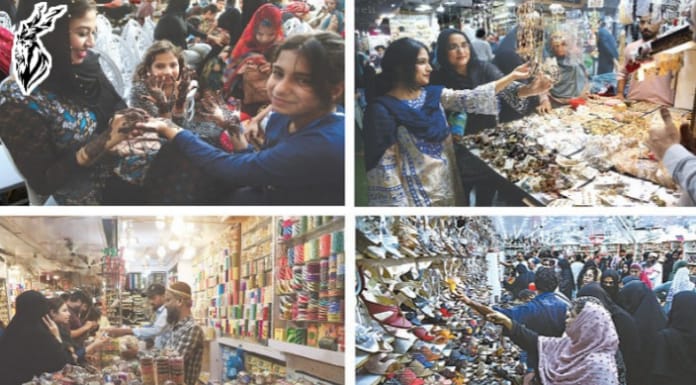

KARACHI: As the holy month of Ramadan draws to a close, Karachi’s markets are pulsating with energy, with Eid al-Fitr shopping reaching a fever pitch. This year, the festive fashion landscape is distinctly marked by two dominant trends: the shimmering allure of so-called “Kashmiri” bangles and the elegant drape of flowing kaftans, creating a vibrant tapestry of tradition and contemporary style across the city’s commercial hubs.
The metallic jingle of Kashmiri bangles has become the season’s unmistakable soundtrack. Adorned with tiny bells and available predominantly in gold and silver finishes, these accessories are considered essential for completing the Eid ensemble. Interestingly, their origin story reveals a complex journey of global fashion. A salesman at the bustling Jama Cloth Market disclosed that the trend, amplified by social media, likely originated in Nepal, was adopted in India, and subsequently branded as “Kashmiri” upon arrival in Pakistan. These bangles, often paired with stacks of multicoloured glass counterparts, command premium prices, with sets of a dozen ranging from Rs800 to Rs1,000. They are prominently featured at major shopping destinations like the Gulf Shopping Mall near Teen Talwar and along Tariq Road.
Accompanying the bangle craze is a strong demand for Kashmiri kaftans and delicate cut-dana embroidery, where beads are intricately worked into necklines, hems, and dupatta borders. However, the cost of these garments presents a significant hurdle for many shoppers. With prices for a single embroidered shirt starting at Rs5,000 and soaring to Rs12,000 or more, the strain on household budgets is visibly apparent. This economic pressure is reshaping shopping patterns, driving crowds toward more affordable alternatives.
“The rush truly begins after Iftar and turns into a mad scramble post-Taraveeh prayers,” observed a vendor in Saddar. Roadside stalls and traditional markets like Zainab Market and the Saddar Cooperative Market are witnessing the heaviest footfall, offering smart bargains on cotton suits in plain or dual-tone shades. In contrast, high-end boutiques and major malls, which have curiously removed sale signs during this peak period, report thinner crowds, with many visitors engaging only in window-shopping or seeking respite in the air conditioning before returning to the bustling footpath vendors.
The shopping fervour is not confined to women. Markets catering to men’s clothing are equally animated, with shoppers seeking shalwar kameez for Eid prayers. The dynamic also sees families dividing tasks, with some husbands minding children—often pacified with treats from stalls selling candyfloss and popcorn—while their wives hunt for clothing, cosmetics, and accessories. This annual ritual underscores the communal spirit of Eid, even amidst the commercial frenzy.
As Karachi embraces these evolving trends, the Eid shopping experience reflects a blend of aspirational fashion and pragmatic spending. The hype around Kashmiri bangles and kaftans highlights the powerful influence of social media on local trends, while the pivot to roadside markets underscores the economic realities facing consumers. The city’s markets, in their vibrant chaos, continue to be the heart of Eid preparations, where tradition and trend converge in the lead-up to the celebrations.
Source: Dawn News