Home Blog Page 188

Latest Reforms In Image Of Muslim Ummah

In today’s world, the Muslim ummah is in a total state of disorganization. Although the Muslim ummah has been ordained by Allah to stay in a civilized and integrated social order with complete unity, the ummah in this era chose disunity.

Every Muslim, regardless of being in a Muslim dominated area or non-Muslim dominated area, has faced with uncountable challenges regarding Islam. This is mainly because of fancying and adoption of the western mode of life, Disunity of Muslim ummah under the western trap of imposing proxies, Inefficiency of Organization of Islamic Council (OIC) in global affairs, Underutilization of the demographic dividend, Crisis of leadership, Lower spending of GDP on education and Lagging behind in science and technology.

All we encompass is political instability, war and unrest due to our own contribution towards disunity and disintegration among our Muslim brethren. Our leaders need to stop paying attention to unimportant issues and keep Islamic values, education and innovation in focus, in order to make the Muslim world stand side by side with the western world. The alliance of Pakistan, Malaysia and Turkey in launching BBC like TV channel is a step forward in doing so. This is the potential we need.

Author: Shaheer Sialvi

Article Writer, Poet and Social Media Activist

The views expressed in this article are the writer’s own and do not necessarily reflect the views of The Pakistan Frontier.

Dynamics of a New World Order: USA’s Last Grand Stand

The end of the 45-year Cold War produced a big kid to influence and interfere in the geopolitical world: the United States of America. Since then, America has enjoyed the status of the sole superpower in the unipolar world system. The well-defined hierarchy of power has enabled America to produce emerging economic greats. Thus, the US possesses a robust hard power, a blue water navy, a political and strategic webbing throughout the world, accompanied by a cultural hegemony over third world states, i.e. America’s influence on the third world, though not conspicuous, through cultural foundations to maintain its hegemony. But it seems that the glorious hegemony and dominance will come to an end in the coming decades. The world in the 21st century has changed in unprecedented ways. The times and dynamics have changed. The United States’ disregard for international norms and society, its reduced engagement with the world, the economic muscle of a rising China, the resurgence of mighty Russia, popping up of nuclear warheads around the globe leave room to contemplate the status quo of this big kid.

 The powerful rise of the BRIC countries (Brazil, Russia, India, and China) to great nations are shifting the balance of power. The multipolar world with multiple superpowers is seemingly on the horizon of the 21st century, but this multipolarity will differ from the multipolar world system of the past. The projected geopolitical bloc will not be a mesh of military muscle and hard powers. This time, the multipolar world system will be a complex amalgam of hard power, economies, populations, soft power, strategic alliances, nuclear arsenals, and the complexity of competition between mighty adversaries.

 The American-led international order is likely to be replaced in the coming decades by international order of great power friction. For the first time in history, the stability of the future world plus the balance of power will be determined not only by the unpredictability of rivalry between symmetrical great powers but also by the lethal potential of middle and small countries and non-state actors possessing nuclear weapons.. Iran, Pakistan, the DPRK, and terrorist organizations will be rare great powers or poles in the future multipolar globe. However, the consequences of their activities can quickly ricochet around the world, creating a new source of potential instability.

 An example of this is the event in 2009 when the DPRK (Democratic People’s Republic of Korea) sent a communications satellite into space on a Taepodong 2 ballistic missile. Concerned neighbors and the U.S. saw the missile launch as a cover for testing long-range ballistic missile technologies as a threat to their national security. Pyongyang claimed the satellite had entered orbit, but U.S. specialists deemed it a failure noting that the missile had traveled 3,200 kilometers before landing in the Pacific Ocean. A careless launch of a communications satellite or military exercise by a country with the 197th Gross Domestic Product per capita in the world can become a threat “to international peace and security” (Obama, Prague Statement) and a significant cause of global instability shortly.

 Moreover, the importance of artificial intelligence and cyber in the future multipolar world must be emphasized. The command and control networks responsible for the use of nuclear weapons are vulnerable to advances in AI and cyber. Furthermore, no technology is immune to mistakes. Failures in the nuclear business, where so much is at stake, can be extremely disastrous. Hypersonic weapons are the most dangerous of the emerging technologies in the nuclear world.  Because of their speed and maneuverability, they can fly in unexpected patterns that elude standard missile defense systems. With that, intangible cyber operations cannot be quantified or tracked in the same way that actual nuclear hardware, such as missiles, can be counted and limited.

This new class of weaponry drew a lot of attention when Russian President Vladimir Putin declared in 2019 that Russia had deployed its hypersonic glide vehicle, the Avangard. In what many are calling a new “arms race,” Russia, China, and the U.S. are racing to develop their own hypersonic capabilities. While the U.S. has stated that it wants to have a fully operational hypersonic weapon by 2022, China and Russia seem to be ahead of the game.

 So, one may enquire whether the emerging multipolar geopolitical bloc will be potentially stable or not? Many IR neo-realists see unipolarity as a source of potential instability, leading actors to use hard force to counterbalance the influence of the hegemon, while multipolarity, on the other hand, ensures global stability. Now, here it is important to remember that times have changed, regional and global dynamics have altered unprecedentedly. The approaching nuclear multipolarity does not seem to enjoy stability in this regard. There are some new crises and challenges that would be a part of coming multipolar world as well such as loose nukes, Iran and DPRK illegal nuclear status, Iran – Israel confrontation, perpetuating war-like scenarios between two nuclear warheads India and Pakistan, Taiwan and Japan fear of nuclear threats from DPRK and the chutzpah of populist leaders around the world igniting the flame of xenophobia and islamophobia. All these challenges appear to be chasing the approaching multipolar world with its balance of power and seem to be throwing the world into disarray instead of letting it enjoy the peace and harmony between multiple superpowers.

 Undeniably, Asia will write the future of nuclear powers. Here, major and sub-regional systems collide in multiple and complex ways. The ability of India and Pakistan to (1) codify their stated commitment to minimal restraint and prevent an arms race, and (2) avert a crisis over Kashmir that leads them into a nuclear conflict, will determine their nuclear fate. The American tendency to characterize the South Asian nuclear issue in terms of this bipolar dynamic overlooks the important role of China; Pakistan is focused on India, while India is focused on China. Moreover, unlike Pakistan, India is motivated by great power ambitions. In the next decade, the nuclear future could be much more dynamic than in the past.

 Finally, bear in mind that while America is losing its economic and military hegemony over the world, it still has a master bench in the geopolitical bloc that no one can occupy. America has a chance to solidify its role as the world’s key power and still holds better cards than any of its rivals. Russia’s military budget is ten times that of the United States. Its economy is smaller than Texas’, and its population is projected to shrink by 30% over the next thirty years. Russia has no allies to speak of and is up against NATO. The United States is institutionally a mess, but China’s system is even worse. “The United States is a flawed democracy, while China is an oligarchy headed by a dictator for life”(Michael Beckley in his book unraveled). Compared to all the expected poles in the near multipolar world, America is the only nation that is both large, young, and well educated. Hence America seems to play a central role in the coming world order, and its influence and gravity cannot be ignored in any balance of power.

The author of this opinion article, Ayesha Zafar is from National Defence University Student of International Relations.

The views expressed in this article are the writer’s own and do not necessarily reflect the views of The Pakistan Frontier.
Western Powers Pressurising Pakistan To Choose Their Side And Leave China, Says Imran Khan

0

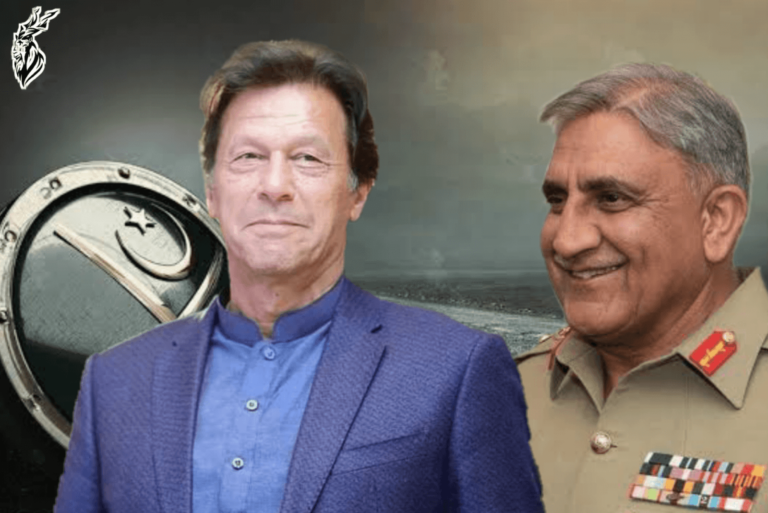
Prime Minister Imran Khan has said that it is very unfair of the United States and Western powers to put pressure on countries like Pakistan to choose sides and downgrade their relationship with China. The premier commented in an interview with English language state broadcaster China Global Television Network (CGTN).

He asserted that Pakistan would not change or downgrade its relationship with China despite the pressure. The Executive answered the question of the anchorperson regarding the relationship between Pakistan and China. He said that Pakistan has always had a special relationship with China. The relationship has only gotten stronger with time. Pakistan and China always stand together at the international forum; he added.

There was a strange rivalry taking place in the region which was publicly known. He said that it can be seen that the United States is being wary of China. The way the United States and China are looking at each other creates a problem because the United States has formed a regional alliance to maneuver China, called the Quad which includes the US, India, and a couple of other countries

Moreover, PM Imran Khan termed the China-Pakistan Economic Corridor (CPEC) as the biggest thing happening in Pakistan and the economic future towards which the country is headed.

Pak Army And Intelligence Gathered Information From The World That Helped Us Fight Covid-19, Says Imran Khan

0

Prime Minister Imran Khan has appreciated the role of Pak Army and Intelligence in tackling the Covid-19 Pandemic.

The Premier while addressing a session of National Assembly said that the Intelligence and Defense Institutions have played a vital role in dealing with the deadly Covid-19 Pandemic which led to a decrease in COVID-19 cases and helped saving precious lives of people.

Imran Khan added Intelligence updated us with situations and measures taken by world leaders to fight Covid-19 and suggested a better alternative.

Security Guard Who Murdered Bank Manager Over False Blasphemy Accusation In Khushab Sentenced To Death Twice

0

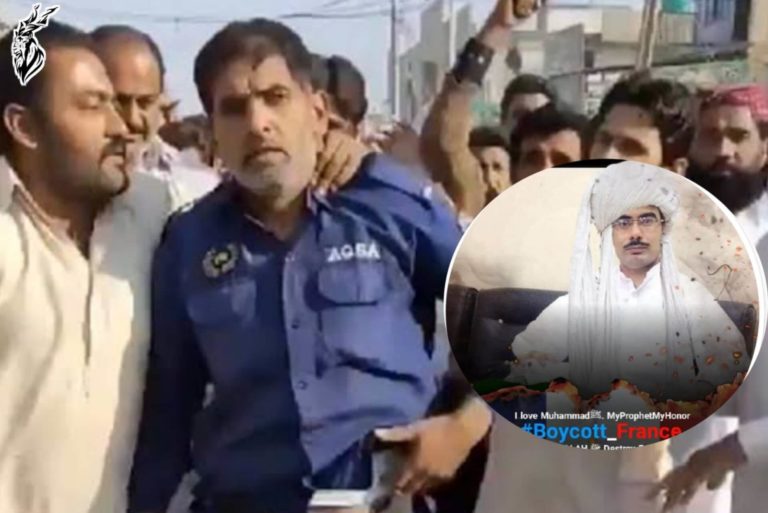
Last year in November, a security guard shot Malik Imran Hanif with a rifle in the accusation of blasphemy. Malik Imran Hanif was a branch manager of National Bank of Pakistan, located in Quaid Abad Tehsil of Khushab.
Malik Imran Hanif was rushed to the hospital in critical condition. He was shifted to Lahore where he could not bear the wounds and died.

The security guard was arrested and now the anti-terrorism court in Khushab has ruled against him.
According to the verdict, the security guard has been sentenced twice to death and 12 years in prison on the charges of blasphemy. The judge said that the accused is fined Rs. 1.5 million if found guilty and if he does not pay the fine, he will be sentenced to 2 more years in prison.

US General Asks US Government To Implement Imran Khan’s Solution In Afghanistan

0

Top US General in Afghanistan warns of a civil war as rapid loss of districts around the country to the Taliban is worrisome. Security in Afghanistan is decaying.

For a long time Prime Minister Imran Khan has been saying that the only way to solve Afghan conflict is a political solution. Now US Four Star General Miller told a small group of reporters in Kabul that for now he has the weapons and capability to aid Afghan forces.

Only a political solution will bring peace to the war-torn nation, he said. He was insistent that only a political solution would bring peace to Afghanistan.

“It is a political settlement that brings peace to Afghanistan. And it’s not just about the last 20 years. It’s the last 42 years,” he said. Miller also referred to post-Russian-invasion events when a civil war gave rise to the Taliban in 1996.

He added that “As we start talking about ‘How does this all end?’, the way it must end is a political solution.”
However, he refused to say where the US and its allies were in the withdrawal process.

India Urged Pakistan To Help Fix Their Relation With Afghan Taliban, We Told Them To Restore Kashmir’s Status Then We Will Talk To You, Says Moeed Yousuf

0

India who always supported those powers fighting against the Afghan Taliban just changed its diplomatic side as a result of US troop withdrawal from Afghanistan.

Pakistani National Security Advisor (NSA) Moeed Yusuf revealed that the Indian government contacted Pakistan and urged them to help India to establish diplomatic ties with Afghan Taliban.

Pakistani government responded that firstly, we desire to restore the special status of Indian Occupied Kashmir (IOK), article 370 and 35A that was revoked in August 2019, then we will be available for talks with India.

NSA Moeed Yusuf revealed this information after Indian delegation visited Afghan Taliban leadership in Qatar. Yusuf called it a shameful act done by the the Indian government and said they once supported those powers who wanted to eliminate Afghan Taliban, now they are trying to fix relationship with the same people.

It is “shameless” of India to engage the Afghan Taliban after having supported operations against them for a long time, Says NSA Moeed Yusuf

0

Special Assistant to Prime Minister on National Security Dr Moeed Yusuf said that it was “shameless” of India to engage the Afghan Taliban in Qatar after supporting military operations against them for a long time. Earlier this month Indian publication The Hindu quoted a senior Qatar official as confirming that Indian officials made a “quiet visit” to meet the Taliban political leadership based there.

Yusuf, when asked about how Pakistan viewed the India-Taliban meeting, said: “I want to ask that with what moral standing did these Indian high-level officials meet the Taliban there? Did they not feel ashamed?”

He further said, “The Indians kept having the Taliban killed daily and kept giving funds for operations against them, and today they have reached there to have talks.”

Yusuf said, “India contacted us and said they wanted to fix the relationship, and we told them we desired the restoration of the pre-August 2019 status of Indian illegally occupied Jammu and Kashmir. Besides, our policy is based on the ease of life for Kashmiris.”

DG Rangers Sindh Slams Sharmeen Obaid Chinoy, Says Pakistan Not As Bad As Portrayed by Media

0

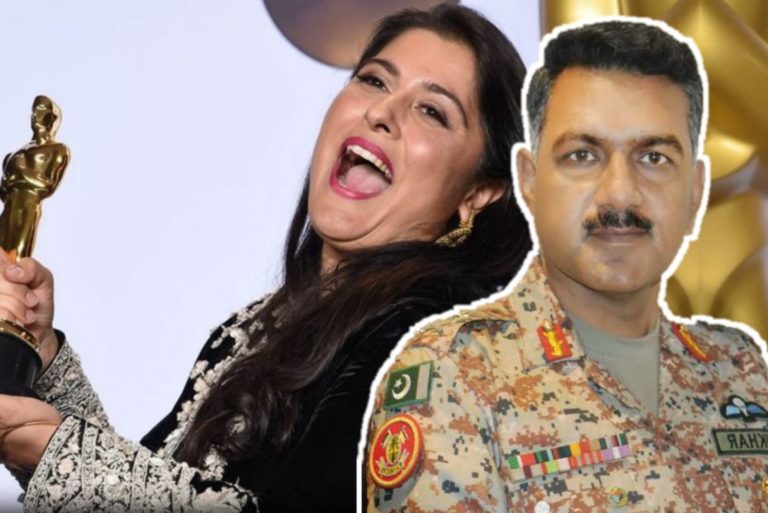
The head of the paramilitary force said that Sharmeen Obaid Chinoy’s Oscar-winning film “Saving Face” was made after three incidents of acid attacks were reported in the country.

He then compared the situation in Pakistan with London, saying that more than 800 incidents of acid attacks were reported in the British capital yet no film was made and neither did the media report on it.

“10,000 knife attacks happened in Britain and no one got to know about them. Do you think London is safe?” asked the DG Rangers from the participants.

He also compared Karachi to New York, saying that in 2020, 1,638 or 1,688 armed robberies took place in New York while only 280 took place in Karachi.

“We are not as bad as we are made out to be and we have started thinking ourselves as bad,” said the DG rangers.

Enemy Is Trying To Damage Pakistan’s Global Image, Says DG ISPR

0

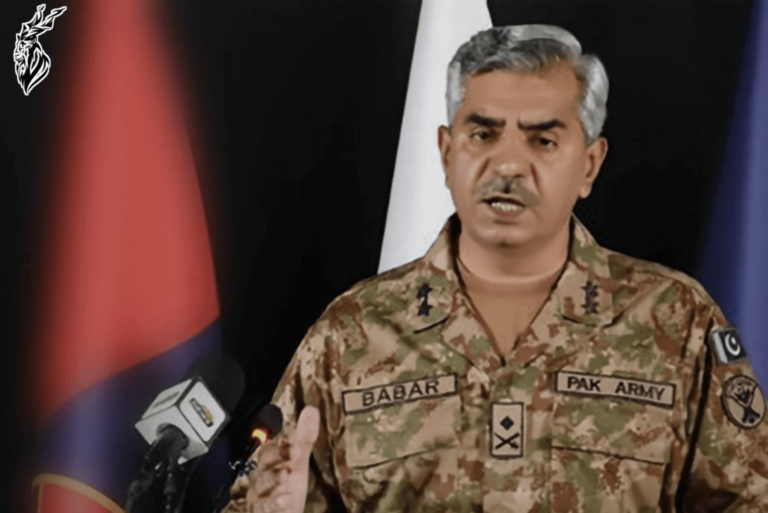
DG ISPR Major General Babar Iftikhar has said that enemies of Pakistan have attempted to damage the country’s image worldwide. While addressing the National Amateur Short Film Festival (NASFF) Awards Ceremony, the military’s top spokesperson expressed his aim that now it is time that we enhance Pakistan’s impression globally as we have almost won the war against terror.

Major General Babar Iftikhar expressed the struggle of Pakistan against terrorism and said that Pakistan faced a prolonged and testing war for two decades. Besides, its efforts to cause us harm through the war, the enemy has been attempting to impair the country’s dignity and image before the world; he added.

The DG ISPR further explained that perception is considered a reality in today’s world, and every country aspires to build its perception. The Major General said that we need to adjust this perception with the country’s reality, which is magnificent. Today’s festival is a part of such efforts; he added.