
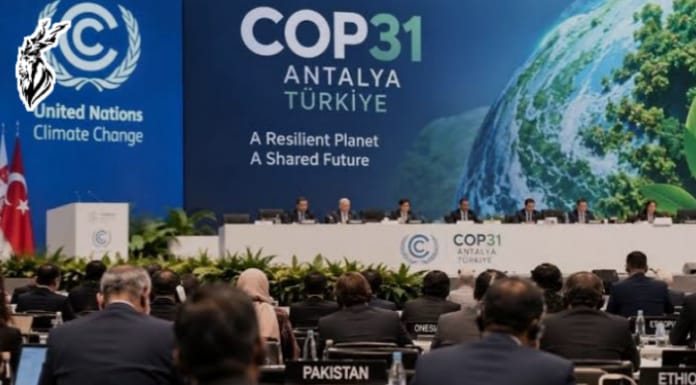

Pakistan has been selected for a COP31 climate finance initiative as one of the first five pilot countries chosen to help developing nations turn climate commitments into finance-ready projects, according to the COP31 Presidency.
The announcement names Ethiopia, Fiji, Indonesia, Pakistan and Uzbekistan as the initial pilot countries for the Climate Implementation Bridge (BRIDGE) initiative, unveiled at New York Climate Week as part of an implementation-focused agenda ahead of the UN climate summit in Antalya, Türkiye, in November.
The COP31 climate finance initiative is being delivered in partnership with the United Nations Development Programme. It seeks to bridge the gap between countries’ climate ambitions and the financing required to implement them by developing bankable project pipelines and strengthening national capacity.
For Pakistan, the selection offers a platform to better connect its climate and development priorities with international financing opportunities. The country faces significant climate-related risks, including floods, droughts, heatwaves and water stress, and has been seeking to mobilize international support for its climate and development needs.
The COP31 Presidency said the pilot countries would develop country-led pathways linking climate finance with investment-ready projects and national development targets. Experience from the initial group would subsequently inform the expansion of the initiative to other participating countries, particularly developing countries, Small Island Developing States and Least Developed Countries.
The BRIDGE initiative will also seek to identify implementation bottlenecks, strengthen countries’ investment readiness and improve access to the existing international climate support system.
In a related development, the COP31 Presidency launched the Sustainable Urban Resilience Financing Facility (SURFF) in partnership with ILBANK, UN-Habitat and the World Bank. The facility is designed to address gaps in urban climate finance in low- and middle-income countries as they implement their Nationally Determined Contributions and National Adaptation Plans.
It aims to help countries and cities translate national climate commitments into investment programmes and finance-ready projects addressing local resilience needs, while mobilizing public and private financing and strengthening implementation capacity at the local level.
SURFF will operate through three main pillars: the Resilient Cities Country Platform, which will link national urban resilience priorities with project preparation and financing; the Resilient Cities Centre of Excellence, which will develop tools and share implementation experience; and the International Resilient Cities Dialogue, which will facilitate exchanges among countries and partners on climate finance and implementation.
Türkiye’s Minister of Environment, Urbanization and Climate Change Murat Kurum said climate ambitions could not be realized without adequate financing. “Climate ambition without finance is like an EV without a battery – it won’t go anywhere,” he said, stressing the need to turn climate plans into investable projects and match them with appropriate financing.
The COP31 Presidency said the initiatives were part of its broader Action Agenda focused on accelerating implementation of climate commitments, following the launch earlier this week of the “35-by-35 Global Electrification Pledge” and a new initiative on climate-responsible artificial intelligence. The initiatives are intended to strengthen the implementation-focused approach of COP31, with the Antalya summit scheduled for November.
Source: ARY News