
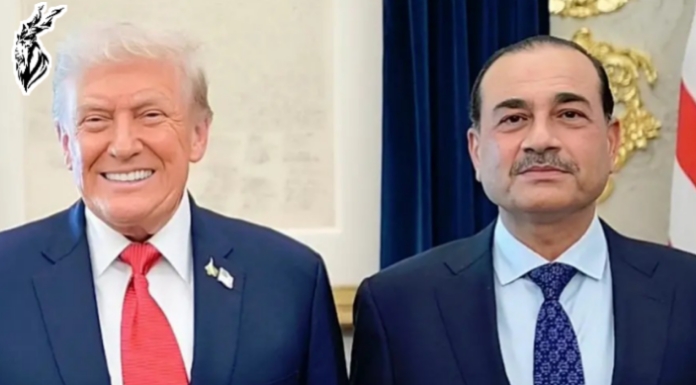

U.S. President Donald Trump has said negotiations between Washington and Tehran could resume within the next two days and indicated that Pakistan is the most likely venue for the next round of dialogue, praising Asim Munir for his role in facilitating the process.
In remarks reported by the New York Post on Tuesday, Trump said his administration was inclined to continue talks in Pakistan following the first round of discussions held in Islamabad over the weekend.
“You should stay there, really, because something could be happening over the next two days, and we’re more inclined to go there,” Trump said.
He added that Pakistan was a more suitable venue due to the role played by its military leadership. “It’s more likely, you know why? Because the Field Marshal is doing a great job. He’s fantastic, and therefore it’s more likely that we go back there,” he said.
Possible second round of talks
Trump’s comments come amid reports that negotiating teams from the United States and Iran could return to Islamabad later this week for another round of discussions.
Pakistan hosted direct talks between the two sides on Saturday and Sunday, marking the highest-level engagement between Washington and Tehran since the Iranian Revolution. The delegations left Islamabad without reaching an agreement, though the negotiations ended without a breakdown.
According to Reuters, Pakistani officials are in contact with both sides to determine the timing of the next round, which could potentially take place over the coming weekend.
A senior Pakistani government official told Reuters that Iran had responded positively to the idea of continuing negotiations.
“We have reached out to Iran and received a positive response indicating they are open to a second round of talks,” the official said.
Efforts to extend ceasefire
Officials familiar with the diplomatic exchanges said intermediaries are working to bring Tehran and Washington back to the negotiating table, with Pakistan playing a central mediating role alongside support from regional partners including Turkey and Egypt.
The immediate focus of the diplomatic effort is to extend the current ceasefire between the two countries.
Speaking earlier this week, Prime Minister Shehbaz Sharif said Pakistan was continuing “full efforts” to resolve the conflict and maintain the truce.
“As I am talking to you, matters that are not resolved are being addressed and full efforts are underway,” Sharif said during a federal cabinet meeting.
The prime minister also met Asif Ali Zardari to brief him on ongoing diplomatic initiatives and his planned visits to Saudi Arabia and Turkey aimed at strengthening peace efforts.
Ceasefire deadline approaching
The ceasefire between the United States and Iran, brokered on April 8 after weeks of escalating conflict, is scheduled to expire on April 22.
Although the truce remains technically in place, tensions persist. The United States has moved toward enforcing a naval blockade of Iranian ports, prompting warnings from Tehran that such actions could violate the ceasefire agreement.
Pakistan’s diplomatic outreach
Following the Islamabad talks, Pakistan has stepped up diplomatic outreach to build international support for continuing negotiations.
Deputy Prime Minister and Foreign Minister Ishaq Dar has held discussions with several counterparts, including Yvette Cooper of the United Kingdom, Wang Yi of China, Hakan Fidan of Turkey, Faisal bin Farhan of Saudi Arabia and Badr Abdelatty of Egypt.
Diplomatic sources said Pakistan has urged all parties to respect the ceasefire and emphasised that dialogue remains the only viable path to resolving the crisis.
The outreach has helped create a broad, informal coalition aimed at sustaining the negotiation process and buying time ahead of the April 22 deadline. Officials are also exploring options to extend the truce by at least 45 days while technical discussions continue.
While both sides have signalled willingness to keep negotiating, differences remain over the agenda, objectives and venue for the next round of talks. Diplomatic sources said Iran prefers Islamabad as the host city due to its proximity and confidence in Pakistan’s mediating role, whereas the United States has been evaluating alternative venues due to logistical and security considerations.