Home Blog Page 4

UK Pound to Pakistani Rupee Rate Today – May 26, 2026: GBP Steady at Rs 374-379

0

The UK Pound Sterling (GBP) remained steady against the Pakistani Rupee (PKR) in the open market on Tuesday, with no significant change recorded compared to the previous trading session. According to market data, the UK Pound was trading at Rs. 374.08 for buying and Rs. 379.10 for selling on May 26, 2026, unchanged from May 25.

The British Pound Sterling remains one of the world’s strongest and most actively traded currencies. As the official currency of the United Kingdom, the Pound’s performance is closely linked to monetary policy decisions by the Bank of England, UK inflation trends, economic growth data, and investor confidence in British financial markets. Currency analysts said the Pound continues to show resilience globally due to the UK’s relatively stable economic outlook and expectations that the Bank of England will maintain a cautious monetary policy stance.

The Pakistani Rupee, regulated by the State Bank of Pakistan (SBP), continues to face pressure amid persistent inflation concerns, external debt repayments, and fluctuations in foreign exchange reserves. Market observers said the local currency remains highly sensitive to developments related to IMF funding, import demand, remittance inflows, and overall investor sentiment toward Pakistan’s economy. The SBP has maintained its benchmark policy rate at 10.50 percent as policymakers attempt to balance inflation control with economic stability and growth objectives.

The stronger Pound is increasing financial pressure on Pakistani businesses and individuals with UK-linked expenses. Importers dealing in machinery, pharmaceuticals, and other British goods are facing higher rupee-denominated settlement costs. At current market rates, a commercial payment of £10,000 requires nearly Rs3.79 million, compared with lower costs earlier this year when the Rupee was relatively stronger. The exchange rate is also affecting Pakistani students studying in the United Kingdom. Annual tuition fees and living expenses in Britain generally range between £15,000 and £25,000, meaning even small currency fluctuations can significantly impact overall education costs for families in Pakistan. Analysts said businesses exposed to foreign currency liabilities are increasingly relying on hedging strategies and SBP-approved forex management tools to reduce exchange-rate risks.

While the stronger Pound raises import and education expenses, overseas Pakistanis working in the United Kingdom are benefiting from improved remittance values. At prevailing market rates, every £100 remitted to Pakistan converts into approximately Rs37,843, increasing the purchasing power of recipient households and supporting domestic consumption. Remittances remain a key source of foreign exchange for Pakistan and continue to play an important role in stabilising the country’s external account position.

Economists believe sustained strength in the Pound against the Rupee could increase pressure on Pakistan’s current account by making imports more expensive. Although Pakistan’s foreign exchange reserves provide some buffer against external shocks, continued depreciation of the Rupee against major global currencies may contribute to imported inflation, particularly in sectors dependent on foreign goods and services. Market participants said currency stability will largely depend on export growth, remittance inflows, external financing arrangements, and progress under the IMF programme.

Financial analysts expect the GBP/PKR rate to remain range-bound in the near term, with potential volatility depending on the upcoming SBP monetary policy decision and UK economic data releases. The Pound’s trajectory will also be influenced by global risk sentiment and movements in the US dollar index.

Source: ARY News
Commissioner Karachi Orders Closure of Illegal Cattle Markets Over Severe Traffic Congestion

0

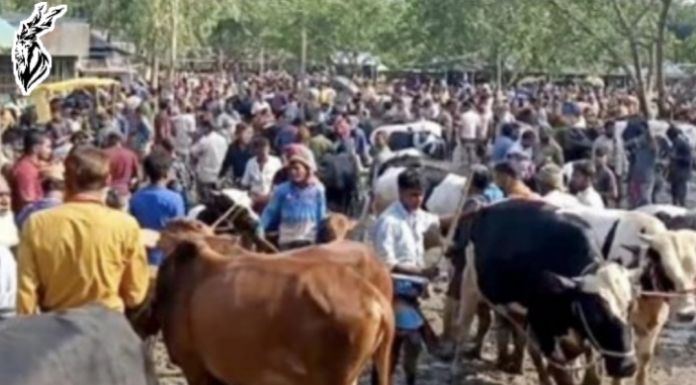
KARACHI: Commissioner Karachi Hassan Naqvi has taken strong notice of unauthorized cattle markets (maweshi mandis) springing up across the city and has directed all district deputy commissioners (DCs) to immediately shut them down, ARY News reported on Saturday.

The Commissioner emphasized that only 21 designated cattle markets have been approved by the city administration, in addition to the central maweshi mandi. He warned that illegal markets are causing severe traffic congestion and creating public nuisance in residential areas.

During a high-level meeting, Deputy Commissioners presented their progress reports. The DC South confirmed that an illegal cattle market set up on Ghulam Hussain Qasim Road in Kharadar has been dismantled. Similarly, the DC Central reported that three unauthorized markets in Nazimabad have been closed. In District East, two illegal markets were shut down, while the DC Korangi said that a market at the Qayyumabad roundabout has also been removed.

The crackdown comes as Eid al-Adha approaches, with the buying and selling of sacrificial animals reaching its peak. Unauthorized markets have been mushrooming in various parts of the city, leading to issues of cleanliness and traffic gridlock.

Commissioner Naqvi reiterated that no leniency will be shown towards violators and warned that strict legal action will be taken against those found operating illegal cattle markets. He urged citizens to only purchase animals from designated markets to avoid legal complications.

Karachi has a history of illegal cattle markets emerging during the Eid season, causing severe congestion on major thoroughfares. The administration has vowed to maintain a zero-tolerance policy against such encroachments.

Source: ARY News

What is the Oreshnik missile that Russia has fired at Ukraine?

0

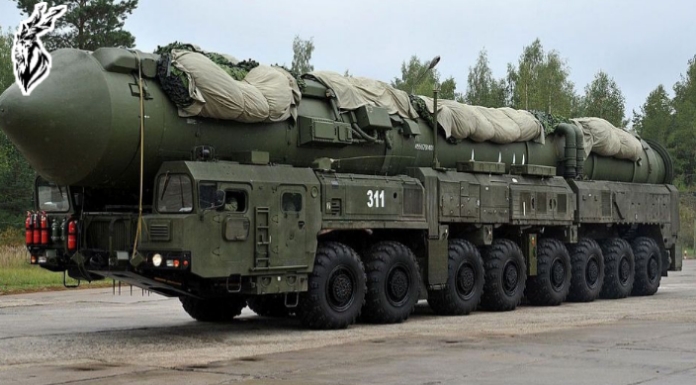
Russia has once again deployed its experimental Oreshnik hypersonic ballistic missile against Ukraine, raising questions about the weapon’s capabilities and strategic intent. The missile, whose name means ‘Hazel Tree’ in Russian, is an intermediate-range system that Moscow has only used twice in combat, most recently in a strike on the western city of Lviv.

The Oreshnik is based on the RS-26 Rubezh, originally developed as an intercontinental ballistic missile (ICBM). Its distinguishing feature is the ability to carry multiple independently targetable reentry vehicles (MIRVs), a technology typically reserved for longer-range ICBMs. According to experts cited by Reuters, this allows it to simultaneously strike multiple targets with high precision. The missile is capable of carrying both nuclear and conventional warheads, though Ukrainian officials stated the most recent strike used dummy warheads.

Ukrainian sources reported that the missile flew at approximately 13,000 kph (8,000 mph) during the January attack, making it extremely difficult to intercept. Russian President Vladimir Putin has claimed the Oreshnik is ‘impossible to intercept’ and possesses destructive power comparable to a nuclear weapon even with conventional payloads, though Western experts have dismissed these assertions as exaggerated. In December 2024, a U.S. official described the missile as ‘experimental’ and noted Russia likely possessed only a handful.

The strike on Lviv caused minor damage to concrete structures and left craters, according to a senior Ukrainian official. Security experts suggest the use of dummy warheads was a deliberate signal aimed at NATO allies, demonstrating Russia’s capacity to strike European targets with a nuclear-capable hypersonic weapon. This comes amid heightened tensions over British and French plans to deploy troops to Ukraine after a potential ceasefire. Moscow has warned that any European forces would be ‘legitimate targets.’

Some analysts believe the Oreshnik launch was also designed to showcase Russian military strength following recent geopolitical setbacks, including the U.S.-backed ouster of President Nicolás Maduro in Venezuela and the seizure of a Russian-flagged oil tanker in the North Atlantic. For more on hypersonic missiles, see Wikipedia.

Experts assess that Russia’s limited stockpile of Oreshnik missiles will likely restrict their use. As BBC News reports, if Moscow believes its warning has been received, further launches may be delayed. The situation remains fluid, with global attention fixed on the evolving conflict.

PM Shehbaz Arrives in Beijing for High-Level Talks with Chinese Leadership

0

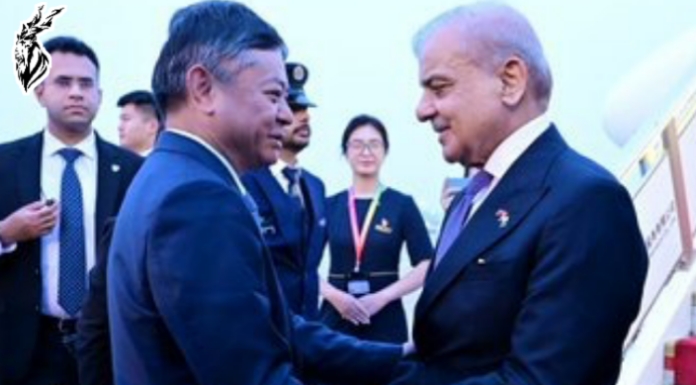
PM Shehbaz Sharif arrived in Beijing on Sunday for high-level meetings with Chinese leaders as part of his four-day official visit to China aimed at strengthening bilateral cooperation and advancing the next phase of the China-Pakistan Economic Corridor (CPEC).

The prime minister travelled to Beijing after concluding engagements in Hangzhou, where he addressed the Pakistan-China Business-to-Business Investment Conference and held meetings with Chinese government officials and corporate executives.

Upon his arrival in Beijing, PM Shehbaz was received by Chinese Minister for Environment and Ecology Huang Runqiu.

According to the Prime Minister’s Office (PMO), the premier will hold meetings with Chinese President Xi Jinping and Premier Li Qiang to further deepen the Pakistan-China all-weather strategic cooperative partnership.

The discussions are expected to focus on CPEC Phase-II, trade, investment, industrial cooperation, agriculture, science and technology, information technology, and people-to-people exchanges.

During his address at the investment conference in Hangzhou, PM Shehbaz highlighted four major sectors for Pakistan-China collaboration: agriculture, information technology, special economic zones (SEZs), and mines and minerals.

He said Pakistan aimed to modernise its agricultural sector through advanced Chinese expertise, mechanisation, improved seeds, and modern farming practices. The prime minister also noted that China annually imports nearly $100 billion worth of agricultural products and expressed hope that Pakistan could significantly expand its share in the coming years.

The premier announced plans to increase agricultural exports to China by approximately $10 billion over the next five to seven years through closer bilateral cooperation.

Highlighting investment opportunities, PM Shehbaz invited Chinese firms to invest in Pakistan’s special economic zones, including a 6,000-acre zone in Karachi where investors would be offered long-term leases, modern infrastructure, and business-friendly facilities.

He also encouraged Chinese industries facing rising labour costs at home to relocate manufacturing operations to Pakistan through joint ventures with local entrepreneurs, particularly in sectors such as textiles and leather.

“We are looking for investment, expertise and experience — not loans or handouts,” the prime minister said, stressing the importance of sustainable economic partnerships.

The PMO said the prime minister also held separate meetings with senior executives from major Chinese firms, including CATL, StarCharge, Xiuzheng Pharmaceutical, and Sheng Huo Neng Yuan Ke Ji Company.

The discussions focused on renewable energy, battery storage, electric vehicle infrastructure, healthcare, pharmaceutical manufacturing, and industrial investment opportunities in Pakistan.

PM Shehbaz also visited the headquarters of Alibaba Group, where he met Executive Chairman Joe Tsai and witnessed the signing of several memorandums of understanding (MoUs).

During the meeting, Alibaba outlined plans to cooperate with Pakistan in exports, artificial intelligence, fintech, healthcare, and human capital development.

Separately, Deputy Prime Minister and Foreign Minister Ishaq Dar also arrived in Beijing alongside Planning Minister Ahsan Iqbal to participate in the Pakistan-China Political Parties Forum and discussions related to CPEC cooperation.

The Foreign Office earlier said the visit carried special significance as Pakistan and China mark 75 years of diplomatic relations, adding that the engagements were expected to strengthen political trust, strategic coordination, and economic cooperation between the two countries.

Suicide Bombing on Quetta Shuttle Train Kills 14, Injures 20

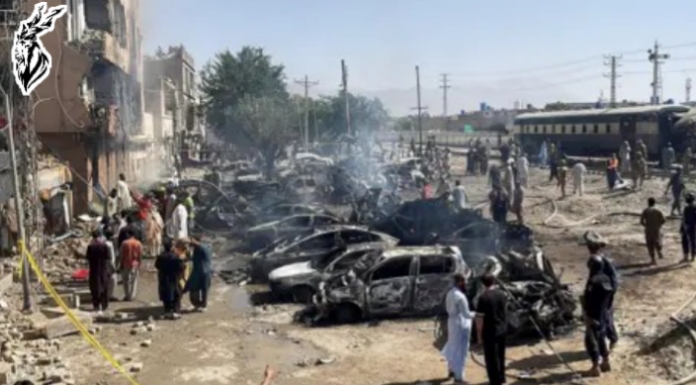
At least 14 people, including three personnel of the Frontier Corps, were killed and 20 others injured after a vehicle-borne suicide bombing targeted a shuttle train in Quetta on Sunday morning, according to the Balochistan government.

The blast occurred near Chaman Phatak shortly after 8am when the train was travelling from Quetta Cantonment to the railway station, officials said.

Balochistan government spokesperson Shahid Rind confirmed that the death toll had risen to 14 and said women and children were also among the injured.

Security forces immediately cordoned off the area while teams from the police, the Counter Terrorism Department (CTD), and bomb disposal squad launched investigations and collected evidence from the site.

The explosion derailed three train coaches, including the locomotive, while two coaches overturned. Nearby vehicles and buildings were also damaged, and several cars caught fire following the blast. Rescue officials later controlled the flames after an extensive firefighting operation.

Eyewitness footage from the scene showed heavily damaged train carriages, overturned coaches, and rescue workers carrying injured passengers away on stretchers as security personnel secured the area.

Authorities declared a medical emergency in Quetta hospitals, with doctors, paramedics, and emergency staff called in to assist the wounded. Chief Minister Sarfraz Bugti was said to be personally monitoring the situation.

Later, Interior Minister Mohsin Naqvi arrived in Quetta and jointly chaired a high-level security meeting with CM Bugti. Officials reviewed an initial report presented by the provincial police chief and discussed the ongoing investigation.

The Balochistan government blamed “Fitna al Hindustan” for the attack — a term used by the Pakistani state for militant groups allegedly linked to Indian-backed terrorism in the province.

President Asif Ali Zardari strongly condemned the bombing, calling it an attempt to undermine Pakistan’s peace and stability efforts. He vowed that terrorists, facilitators, financiers, and their supporters would be defeated.

Prime Minister Shehbaz Sharif also denounced the attack, saying such acts of terrorism would not weaken the country’s resolve to eradicate militancy.

Deputy Prime Minister and Foreign Minister Ishaq Dar, Railways Minister Hanif Abbasi, and other senior officials similarly condemned the bombing and expressed solidarity with the people of Balochistan.

The Human Rights Commission of Pakistan (HRCP) expressed alarm over the deteriorating security situation in Balochistan, warning of increasing attacks on civilians, public infrastructure, workers, and law enforcement personnel across the province.

Hajj 2026: Sardar Yousaf shares important message for Pakistani pilgrims

0

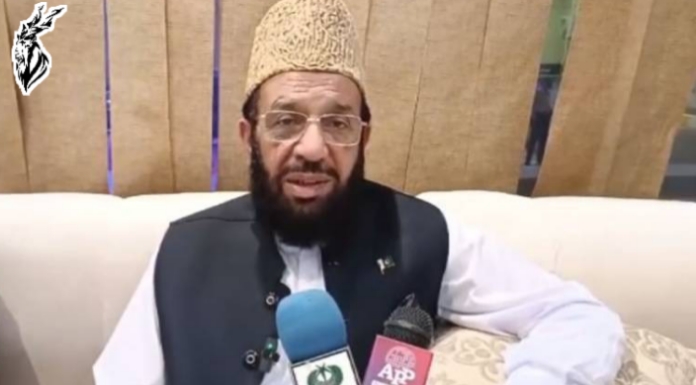
Federal Minister for Religious Affairs Sardar Muhammad Yousaf has urged Pakistani Hajj pilgrims to strictly comply with Saudi laws and regulations during their pilgrimage, emphasizing that their conduct reflects the true image of Pakistan. In a message delivered to pilgrims in Makkah, the minister called for patience, discipline, and unity among the faithful, reminding them that Hajj is a spiritual journey of immense significance.

Yousaf advised pilgrims to take special care of their health and ensure proper water intake, particularly in the challenging climatic conditions of Saudi Arabia. He highlighted that arrangements for Pakistani pilgrims have been significantly improved, with enhanced facilities at key Hajj sites including Mina, Arafat and Muzdalifah. The minister stated that Hajj missions have been instructed to remain fully available for guidance and assistance, and urged pilgrims to immediately contact officials in case of any difficulties or complaints.

The appeal comes as Pakistan International Airlines (PIA) successfully completed its pre-Hajj 2026 operation, transporting thousands of pilgrims to the holy cities. The government has reaffirmed its commitment to ensuring smooth facilitation throughout the Hajj process, with satisfactory arrangements for accommodation, food and transport.

Yousaf also called on pilgrims to maintain calm and support fellow pilgrims during periods of crowding and extreme heat, emphasizing patience as an essential part of the spiritual journey. He described Hajj as a profound spiritual experience and requested pilgrims to remember Pakistan in their prayers.

Source: ARY News

PM Shehbaz Invites Chinese Companies to Shift Industries to Pakistan Under ‘Win-Win’ Investment Model

0

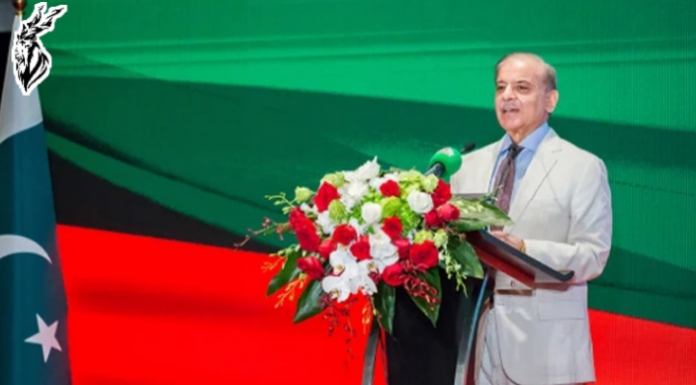
PM Shehbaz Sharif on Sunday invited Chinese businesses and investors to relocate industries to Pakistan and form joint ventures with local companies, describing the initiative as a mutually beneficial “win-win model” for both countries.

Addressing the Pakistan-China B2B Investment Conference in Hangzhou, the prime minister said rising labour costs in China and the country’s transition towards advanced industrialisation had created opportunities for industries to move operations to Pakistan.

He said Chinese firms could bring machinery and expertise to Pakistan, partner with Pakistani entrepreneurs, manufacture products locally, and export them to international markets.

“This model will prove highly successful for both Chinese and Pakistani businesses in sectors such as textiles, leather and other industries,” PM Shehbaz said during his speech, which was broadcast on national television.

The premier also encouraged Chinese investors to explore business opportunities in Karachi’s export processing and special economic zones, where Pakistan plans to offer modern infrastructure, investor-friendly policies, and one-window business operations.

Highlighting Pakistan’s mineral wealth, the prime minister said the country possessed vast reserves of minerals and gemstones that offered major opportunities for foreign investment.

Speaking about agriculture, he noted that Pakistan remained an agrarian economy and stressed the need for modern farming techniques, mechanisation, improved seeds, and technology transfer to enhance agricultural productivity.

He said Pakistan had recently sent 1,000 students to China for advanced agricultural training and hoped cooperation in the sector would significantly increase exports to China.

According to PM Shehbaz, China imports nearly $100 billion worth of agricultural products annually, while Pakistan’s current share remains very small. He expressed confidence that stronger bilateral cooperation could help raise Pakistan’s agricultural exports to China by around $10 billion within the next five to seven years.

The prime minister also highlighted opportunities in information technology, artificial intelligence, and battery energy storage systems, saying these sectors held enormous potential for future collaboration.

He announced plans for a major special economic zone near Karachi spanning more than 6,000 acres, where Chinese investors would be offered land on long-term leases under attractive conditions.

“We are looking for investment, expertise and experience — not loans, aid or handouts,” the prime minister said, adding that sustainable economic growth required self-reliance and productive partnerships.

PM Shehbaz further praised the leadership of Chinese President Xi Jinping and described Pakistan-China ties as deeper than the ocean and higher than the Himalayas.

He also expressed satisfaction over the signing of multiple memorandums of understanding (MoUs) worth billions of dollars during engagements in Shenzhen and Hangzhou, noting that several had already been converted into formal agreements.

The prime minister concluded by reaffirming the longstanding friendship between Pakistan and China, tracing bilateral relations back to the historic Silk Road era.

Copper Rate Today in Pakistan: 1 Kg Tamba Price on May 23, 2026

0

Copper prices in Pakistan have held steady on May 23, 2026, with high-quality Millberry scrap copper trading at approximately Rs. 5,500 per kg in major cities including Karachi, Lahore, Islamabad, and Gujranwala. Refined new copper, known for its superior purity, commands a premium ranging from Rs. 5,800 to Rs. 6,200+ per kg depending on quality and vendor. Domestic rates remain elevated due to import tariffs, shipping costs, taxes, robust local demand from electrical and construction sectors, and the prevailing USD/PKR exchange rate.

Internationally, copper prices showed positive movement, with the benchmark reaching around $6.35 per pound (about $13,700+ per tonne on the London Metal Exchange) after a daily increase of roughly 1.4%. Converting at approximately 280 PKR per USD, the base international level equals about Rs. 3,900-4,000 per kg before duties and domestic adjustments. Analysts project copper trading near $6.35 by quarter-end and climbing toward $7.04 over the next 12 months, driven by industrial needs and clean energy expansion.

Copper, often called “Dr. Copper” for its ability to gauge global economic health, reflects active production, major construction projects, and progress in renewable energy. In Pakistan, copper rate movements directly impact costs for electrical cables, wiring, construction projects, solar installations, and scrap recycling operations. The metal’s crucial role in the global energy transition ensures firm future demand, particularly from electric vehicles, renewable power systems, battery storage, data centers, and modernized electricity grids.

Key uses driving copper demand include electrical wiring, power transmission, motors, and transformers in residential, commercial, and industrial settings. The electric vehicle industry requires significantly more copper than conventional cars for motors, batteries, and charging infrastructure. Renewable energy projects depend heavily on copper for solar panel connections, wind turbine components, and storage units. Construction applications include plumbing, roofing, and antimicrobial surfaces. Electronics, 5G networks, and AI data centers further increase demand through high-speed cabling and circuit boards. Notably, approximately 80% of all copper ever mined remains in use today due to its superior recyclability, helping sustain supply even as demand grows.

Source: ARY News

Pakistan Security Forces Kill 16 Terrorists in Bannu Joint Operation

0

In a major counterterrorism success, Pakistani security forces killed 16 militants, including two senior commanders, during a joint operation in Bannu district on Sunday, security sources confirmed.

The operation was conducted by the Pakistan Army, police, and the Counter Terrorism Department (CTD) in the Miryan area following intelligence reports about the presence of armed groups. Security forces stormed multiple militant hideouts, leading to intense clashes. Among those eliminated were Zamri Noor, a high-profile commander accused of orchestrating attacks and spreading instability, and Afghan national Abdullah Saeed.

Two police officers—Constables Waheedullah Khan and Noorullah Khan—were martyred during the operation. Their funeral prayers were held at Police Lines Bannu, attended by senior civil and military officials, tribal elders, and local residents who paid tribute to their sacrifice.

Security sources stated that the operation is part of an ongoing campaign to eliminate militancy from the region, which has seen a resurgence of attacks by Khawarij groups. The term refers to extremist factions that have been responsible for numerous attacks on security forces and civilians in recent months.

The success in Bannu follows a series of intelligence-based operations across Khyber Pakhtunkhwa. Last month, security forces killed Toor Saqib, a most-wanted militant commander, in North Waziristan. According to reports from Reuters, Pakistan has intensified operations against militant hideouts near the Afghan border, where groups like the Tehreek-e-Taliban Pakistan (TTP) operate.

The CTD has confirmed that multiple militant hideouts were destroyed and weapons and ammunition were recovered from the site. Officials said the operation would not be the last, as security forces remain committed to rooting out terrorism. Al Jazeera has reported that Pakistan’s counterterrorism efforts have seen mixed results, but recent coordinated strikes indicate a renewed push.

Local residents expressed relief following the operation, with many hoping it will restore peace to areas long plagued by violence. However, analysts warn that the threat remains significant as long as cross-border sanctuaries exist.

Source: ARY News

Rubio Hints at Imminent Iran Deal Announcement to End Middle East War

0

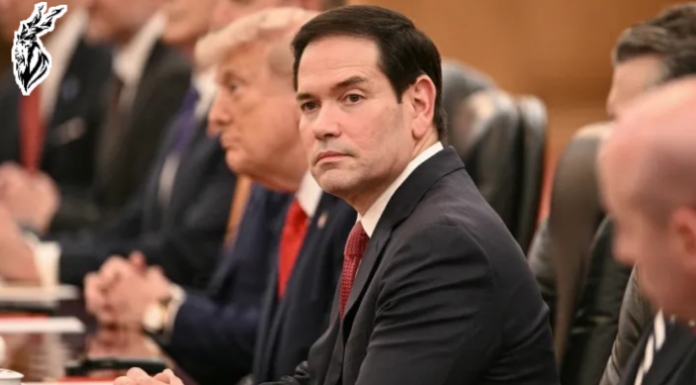
US Secretary of State Marco Rubio indicated Sunday that an announcement on a deal with Iran could come within hours, potentially bringing a formal end to the ongoing Middle East conflict. Speaking to reporters in New Delhi during his first official visit to India, Rubio stated, ‘I do think perhaps there is the possibility that in the next few hours the world will get some good news.’

The emerging agreement, according to Rubio, aims to address US concerns over the Strait of Hormuz, a vital waterway that Iran has largely blocked in response to US-Israeli military operations. ‘The deal would also start a process that can ultimately leave us where the president wants us to be, and that is a world that no longer has to fear or worry about an Iranian nuclear weapon,’ Rubio added.

His remarks followed President Donald Trump’s statement on Saturday that a proposal to reopen the Strait of Hormuz had been ‘largely negotiated.’ In a post on his Truth Social platform, Trump wrote: ‘An Agreement has been largely negotiated, subject to finalization between the United States of America, the Islamic Republic of Iran, and the various other Countries.’ The deal is expected to include confidence-building measures and a roadmap for easing tensions that have escalated into a regional war.

Analysts say the agreement could mark a significant shift in US-Iran relations, which have been strained since the US withdrawal from the Joint Comprehensive Plan of Action (JCPOA) in 2018. The conflict has disrupted global oil supplies, with Iran’s blockade of the Strait of Hormuz causing severe economic repercussions. The Strait handles about 20% of the world’s oil transit, making its reopening critical for global markets.

Rubio did not provide details on the timeline for the announcement but expressed optimism. The development comes as international mediators, including Qatar and Oman, have been working to broker a ceasefire. If finalized, the deal could pave the way for broader negotiations on Iran’s nuclear program and regional security.

The US administration has emphasized that any agreement must verifiably ensure Iran does not pursue nuclear weapons. Meanwhile, Iran has demanded a full lifting of sanctions and an end to military threats. The proposed deal reportedly includes phased sanctions relief in exchange for halting uranium enrichment and allowing international inspections.

Source: ARY News